
by Thomas Kurz
In the previous article on sports skills and strength training you were introduced to the concept of sport-specific strength exercises. In this article you will learn about the danger of an inappropriate use of such exercises.
Danger of Early Specialization
If sport-specific exercises are introduced too early in an athlete’s career, at the expense of general exercises, initially the sport-specific skills are developed at a high pace. Later, though, the athlete hits a plateau because the skills were developed without a foundation of general development. Improving performance at the stage of specialization (when the athlete does mostly sport-specific exercises) by resorting to general exercises is difficult if not useless. The neuromuscular patterns of the techniques (timing, amount of force, velocity, and the angles of movement) are already formed and the general exercises can’t alter them.
Start your long-term training program with general strength exercises and progress to sport-specific strength exercises. (Definitions and examples of general, directed, and sport-specific strength exercises are in the book Science of Sports Training.)
From General Exercises to Sport-Specific Exercises
General strength exercises lay the foundation for sport-specific exercises by strengthening all major groups of muscles around each joint in a balanced way. General strength exercises thus prevent injuries.
Initially general exercises (strength or endurance, for example), done concurrently with technical training, improve the level of technical skill. They then cease to be effective in this respect, and for more improvement in sport-specific skills, you must introduce the so-called directed exercises, which are more closely related to the techniques. After some time even these exercises lose their effect on the technical proficiency of the athlete, and you need even more specialized exercises for further progress. If you continue the general exercises (strength, speed, endurance, coordination) throughout your athletic career, you will show gains in the abilities they are designed to develop, but only if measured by general tests. In other words, performing general exercises will increase proficiency mostly in performing these general exercises. If you gain mass and strength from performing general strength exercises, but the neuromuscular patterns of these exercises do not resemble those of your competitive technique, the strength gain in sport-specific technical tests or in competition will be disproportionately low to the amount of work done and the general strength gain. The same is true for other physical abilities such as endurance or speed.
Coaches that want quick success, especially with young athletes, develop mainly the physical abilities that are dominant in a given athletic event. Some use exercises called “exercises of direct purpose” or “immediately applicable exercises.” In such a system, a shot putter practices the technique only by putting shot, develops strength by standard weightlifting exercises, and speed by short sprints and starts. Such an approach results in a considerable initial improvement of sport-specific performance in shot put but a stagnation of it in only a few years, after which permanent progress of the athlete is limited to strength as measured by standard weightlifting methods and speed measured by the standard 20 meters sprint from starting blocks (Wazny 1981).
The proper way is to use a wide variety of exercises, some of which have similar rhythm and form to those of the athlete’s specialty, to develop gradually sport-specific strength, speed, and coordination and on that base perfect the technique (Wazny 1981).
General Preparation Must Be Sport-Specific Too
The general preparation of athletes is getting “specialized” as training is becoming more sport-specific in the course of an athletic career (Matveev 1981). This does not mean that general exercises become more similar to the sport-specific ones. Rather it means that they are selected to match the changing needs of an athlete subjected to the increasing sport-specific training loads. The exercises of general preparation on one hand have to compensate for imbalances created by the growing training load in sport-specific exercises and, on the other hand, to use the positive transfer of training to the fullest and to limit the effect of any negative transfer. These are the reasons why general preparation differs in various sports (Matveev 1981).
Here are two examples of specialization of general strength exercises: the first is from long-distance running and the second from discus throwing.
Long-distance runners lift weights at the beginning of their training cycle. By doing various weightlifting exercises, runners strengthen all muscles, among them those that affect the efficiency of movement but are not the most stressed in running; for example, the muscles of the upper body. These exercises are done in long sets, at slow pace, and without breaks between sets of different exercises so the athlete works continuously. The resistance in these exercises is set to permit initially about 30 repetitions, and as an athlete progresses that resistance remains unchanged but the number of repetitions increases. The slow pace permits performing the work aerobically, because this is what long-distance running requires (Wazny 1981).
Compare the above general strength exercises for long-distance runners with general strength exercises for discus throwers. Rachmanliev and Harness (1990) give the example of Bulgarian female throwers: full squat, half squat, bench press, clean, and snatch, with resistance ranging from 40%-100% of the athlete’s maximum and with rest breaks up to a few minutes between sets. Tonnage (in metric tons) lifted per workout goes from 18 to 3, and the number of workouts with weightlifting going from 4 to 2 per week. (The closer to the main competition, the less tonnage lifted and the fewer weightlifting workouts.) These figures do not include other general strength exercises for throwers, such as jumps with weights and throws of various implements other than a discus.
References
Matveev, L. P. 1981. Fundamentals of Sports Training. Moscow: Progress Publishers.
Rachmanliev, P. and Harness, E. 1990. “Long-term preparation for advanced female discus throwers.” New Studies in Athletics vol. 5, no. 1 March 1990.
Wazny, Z. 1981. “Sila Miesniowa.” In Teoria i Metodyka Sportu, ed. T. Ulatowski. pp. 110-36. Warsaw: Sport i Turystyka 1981.
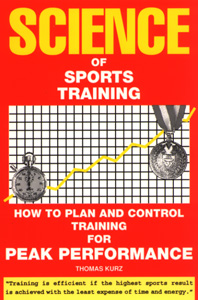
This article is based on the book Science of Sports Training: How to Plan and Control Training for Peak Performance. Get the book now and have all of the info—not just the crumbs! Order now!
If you have any questions on training you can post them at Stadion’s Sports and Martial Arts Training Discussion Forum
Hi Coach,
this is really sound advice. I hear”sport specific” a lot when working with coaches.. You have broken this down very clearly and I will share.
The danger of early specialisation is also the “overplayed, but under trained” athlete who just plays 1 sport, but fails to prepare adequately.
Here in the UK we have a historical bias towards “playing games” , which was beneficial when youngsters played a myriad of sports. Less so when they just playe 1 sport all year round.
“The exercises of general preparation on one hand have to compensate for imbalances created by the growing training load in sport-specific exercises and, on the other hand, to use the positive transfer of training to the fullest and to limit the effect of any negative transfer.”
And here is a good example of the above:
http://www.excelsiorgroup.co.uk/blog/fitness-fencers-part-4
Hello
Very informative article. Wonder what the general preparation exercises
for an Olympic weightlifter would be ?
General exercises typically used in training of Olympic weightlifters: Running including sprinting, jumps (long and vertical, for example, on boxes), rope jumping, push-ups, presses, exercises on gymnastic bars and rings (pull-ups, dips, hangs, swings), gymnastic jumps, wrestling, mat/wrestling gymnastics, kettlebell exercises, wide variety of lifts. Some lifters may do more, some may do fewer, depending on resources and needs.
A chart of exercises used in training for the majority of Olympic sports is in Stadion News of Summer 2000 at http://stadionbooks.com/pdf/nltr0600.pdf
Pingback: Excelsior | Fitness for fencers: part 4